- +8615586668226
- [email protected]
- No. 30, Hongbang Industrial Park, Shenzhen

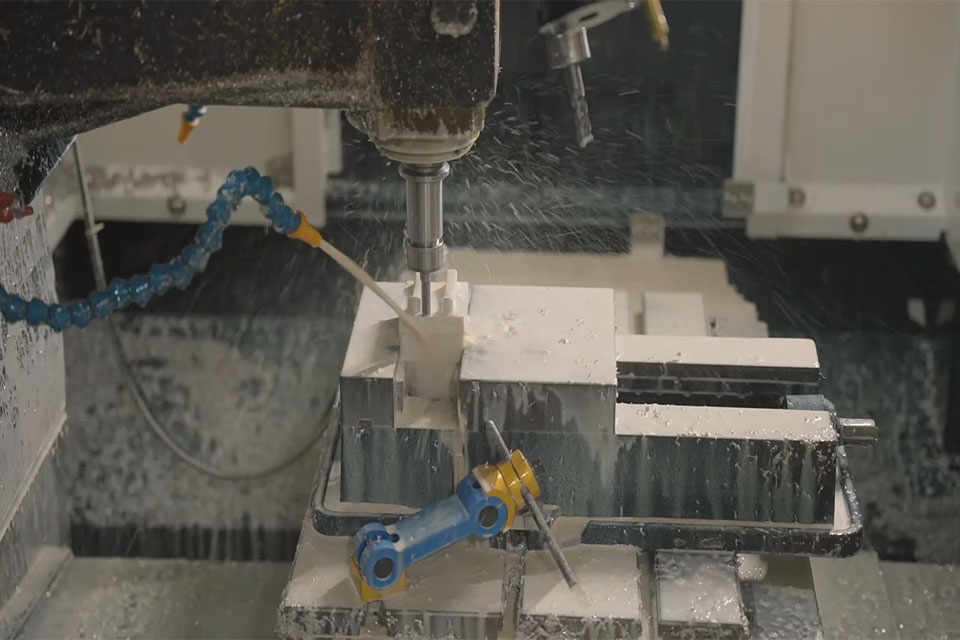
Understanding the Basics of E-Coating
E-coating is an electrochemical process where charged paint particles bond to metal surfaces, forming a thin, protective layer. Unlike traditional methods, it eliminates overspray and ensures even coverage in recessed areas.
Caractéristiques principales:
- Uses water-based paints with minimal environmental impact.
- Achieves precise thickness (15–35 microns) via controlled voltage.
- Ideal for high-volume production due to automation-friendly workflows.
How E-Coating Works: A Step-by-Step Breakdown
- Pretreatment: Parts are cleaned and degreased to ensure adhesion.
- Immersion: Submerged in a paint bath with charged particles.
- Electrodeposition: Current attracts paint to the metal surface.
- Rinsing: Removes excess particles.
- Durcissement: Oven heat solidifies the coating.
This process is widely used in Fabrication automobile for car frames and engine parts.
Key Components of an Effective E-Coating System
| Composant | Rôle |
|---|---|
| Paint Bath | Holds water-based paint and additives |
| Alimentation électrique | Controls voltage for consistent thickness |
| Curing Oven | Solidifies the coating |
| Filtration | Maintains bath purity |
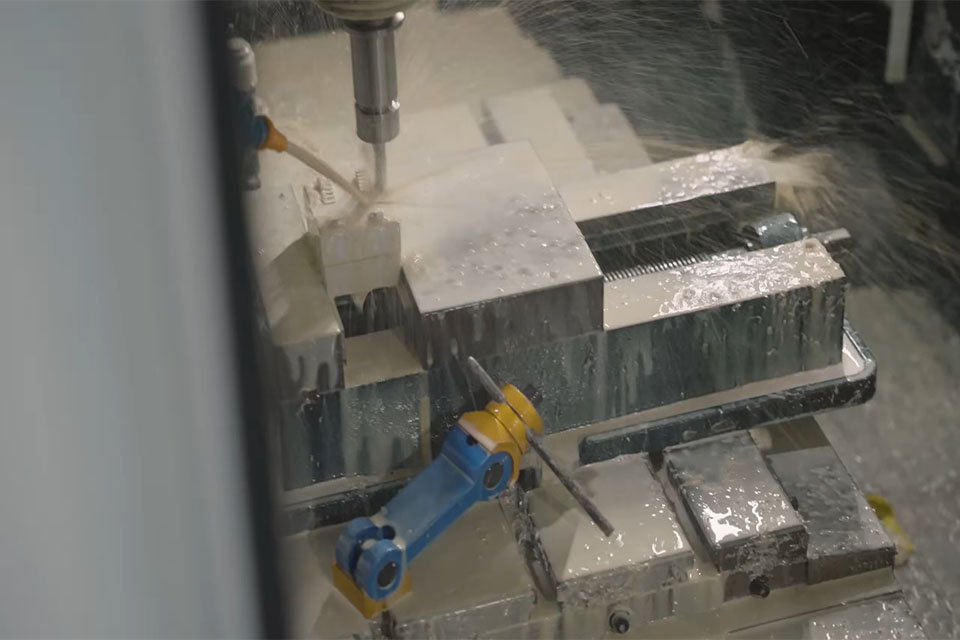
The E-Coating Process: From Pretreatment to Curing
- Pretreatment: Critical for removing oils and contaminants.
- Bath Immersion: Parts are coated uniformly via electrodeposition.
- Post-Treatment: Rinsing ensures no residue remains.
- Durcissement: Enhances durability (20–30 minutes at 150–200°C).
For intricate parts, consider Usinage CNC à 5 axes to optimize geometry before coating.
Materials Compatible with E-Coating Technology
E-coating works best with conductive metals:
- Steel, aluminum, and zinc-coated metals.
- Brass, copper, and electroplated substrates.
Explore Matériaux CNC to choose the right base for your project.
Top Industries Benefiting from E-Coating Solutions
| L'industrie | Application |
|---|---|
| Automobile | Engine parts, chassis |
| Aérospatiale | Structural components |
| Médical | Outils chirurgicaux, implants |
| Électronique | PCBs, connectors |
Pour dispositifs médicaux, e-coating ensures biocompatibility and sterility.
Advantages of E-Coating for Modern Manufacturing
- ✅ Superior Corrosion Resistance: Outlasts traditional paints.
- ✅ Uniform Coverage: Reaches hidden areas.
- ✅ Respect de l'environnement: Low VOC emissions.
- ✅ Rentabilité: Minimal waste for bulk orders.

Limitations to Consider Before Choosing E-Coating
- ❌ Limited to conductive materials.
- ❌ Higher initial setup costs.
- ❌ Thinner coatings vs. powder coating.
E-Coating vs. Powder Coating: A Detailed Comparison
| Facteur | E-Coating | Revêtement par poudre |
|---|---|---|
| Épaisseur | 15–35 microns | 30–150 microns |
| Résistance à la corrosion | Excellent | Bon |
| Color Options | Limitée | Extensive |
| Coût | Lower for high volume | Competitive for small batches |
For decorative finishes, pair e-coating with finition de surface.
Selecting the Right E-Coating Partner for Your Project
Choose a provider with:
- Expertise in usinage de précision.
- Capacity for fabrication à la demande.
- Certifications (ISO, ASTM).
FAQ
How long does E-coating last?
E-coating can protect metals for 10+ years in moderate environments.
Can you paint over E-coating?
Yes—it’s an excellent primer for additional layers.

Is E-coating UV-resistant?
Standard e-coats require topcoats for UV protection.
Does E-coating work on plastics?
No—it requires conductive materials like metals.
Principaux enseignements
- E-coating offers unmatched résistance à la corrosion for metals.
- Ideal for high-volume industries like automobile et électronique.
- Compare with powder coating for thickness and aesthetics.
Ready to enhance your product’s durability? Contactez nous for tailored e-coating solutions.
 EN
EN FR
FR DE
DE AR
AR SL
SL TR
TR ES
ES PL
PL SK
SK PT
PT LV
LV RO
RO ZH
ZH RU
RU LT
LT ET
ET HU
HU SV
SV IT
IT KO
KO NB
NB